

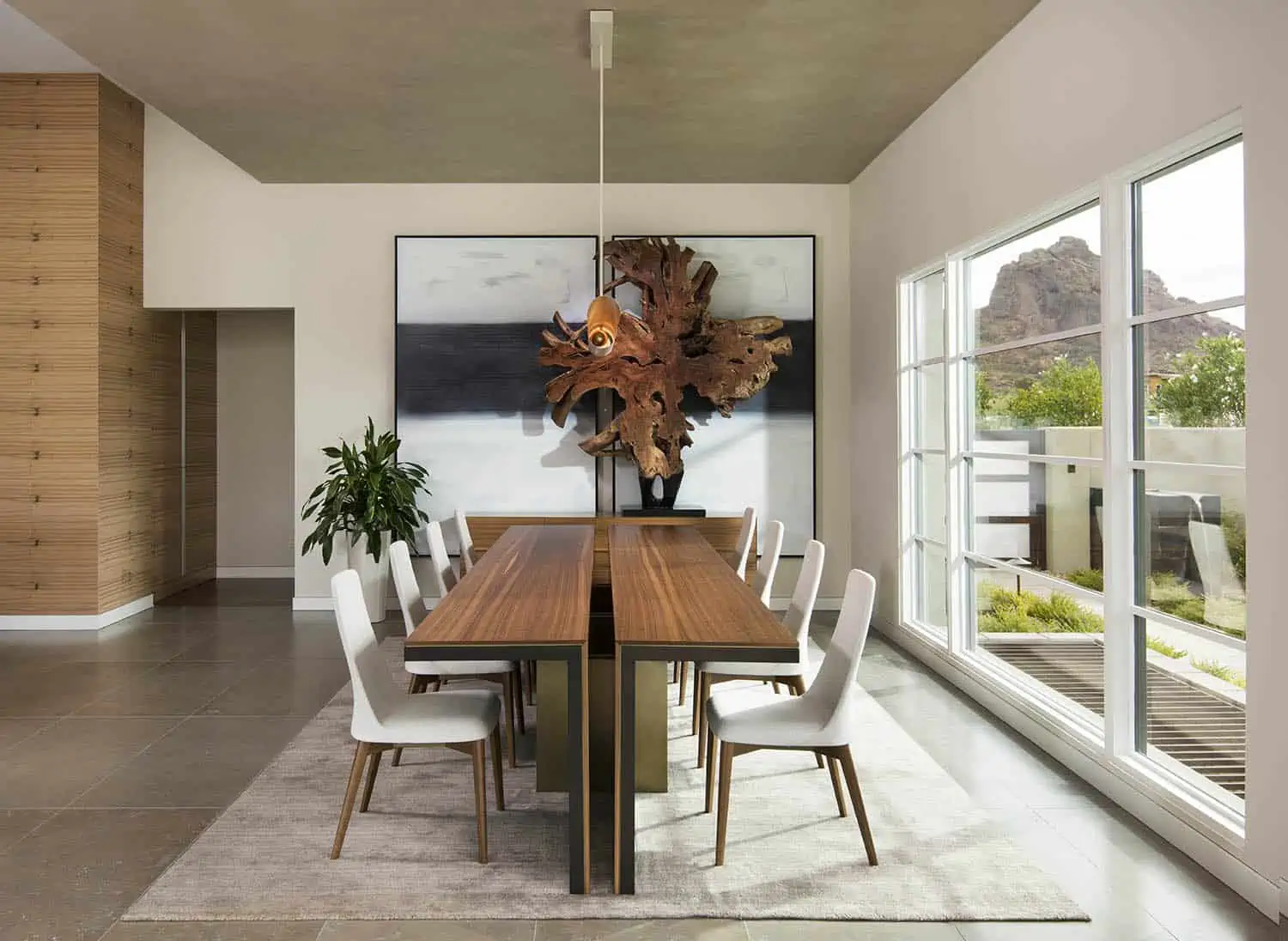
Key Takeaways
- Successful entertaining spaces begin with functionality and flow, not just aesthetics.
- Designing for guests means planning expansion and flexibility ahead of time (seating, zones, outdoor access).
- The best dining environments support both the meal and the social interactions, preparation, gathering, dining, and post‑meal transition.
Designing for Dinner Guests: Tis the season to travel to visit family and friends, and this year, it’s happening at record
numbers. More than 54 million people will travel for Thanksgiving this year, the highest number since 2004 according to
AAA.
That means your home is likely the destination for travelers to enjoy that all-too-famous holiday meal, as guests are
interested in mostly one thing…eating. Whether it’s Thanksgiving dinner or Christmas dinner or something in between,
visiting will be centered around the kitchen and dining room. Creating spaces that allow gathering requires smart space
planning, traffic flow and clever dual-purpose seating. This is the time we have to think about designing for dinner
guests.
First, where can we place everyone to eat? Auxiliary seating should be considered when you select your furnishings at any
time of the year, so you have what you need when you need it. It’s best to consider it in your initial design plan, so it’s
cohesive and well-designed.
I have many examples of what I’ve used in clients’ homes. In large great-room spaces, ideal for informal gathering,
incorporate a long, linear drop-leaf table. During the year, it’s a sofa table. Yet the leaves easily pop up and provide
another dining table. Also, large coffee tables can double for seating. I have had as many as four couples fit on four ottomans
at an over-sized waterfall table. But visiting isn’t just done during the meal but also during the preparation of the meal.
Many great family moments are celebrated in the kitchen as the meal is being prepared by the resident chef or chefs. This
may include thought for safety-conscious induction cooktops, pull out steps or lower height countertops to accommodate the
littler ones in the family. on By creating large-scale islands with both gathering and work stations, not only does the chef
have space to work, but the family and friends can easily find a spot to hang out during the process. Some kitchens I’ve
designed use the under-counter space for a pop-out television when needed—great for the Thanksgiving football game!
And don’t forget outdoor spaces. If your geographical location allows for a few space heaters, you can utilize outdoor tables
for appetizers or snacks before the big meal. Or you can use outdoor seating for an apres-dinner dessert table. It’s nice to get
outside and away from the kitchen that is probably making some guests feel they should do dishes.
Lastly, if you are in home design mode and have the luxury of building what you want, a “dirty pantry” just off the kitchen is a
great space to have to stash dishes, messy pans or open up the catering trays.
By thinking of your space before the holidays, you are all ready to go when those out-of-town guests arrive.
FAQs
- How can one maximise seating for dinner guests without permanently overcrowding a space?
Use furniture that has dual‑purpose design (for example a sofa table that converts to a dining table, or coffee tables that double for seating). Planning for auxiliary seating ahead means you’re ready when guests arrive, without the room looking cluttered year‑round.
- Why is the kitchen island important in guest‑centric dining design?
Because the kitchen often becomes the centre of social interaction during meal preparation, it’s not just where food is made, but where guests gather. A large island with both workspace and gathering stations ensures the host stays connected to guests and the process.
- When might outdoor spaces contribute to dinner gatherings?
If the climate allows, outdoor tables or seating can function as appetizer zones, dessert lounges, or pre/post‑meal spaces. This gives guests options and frees up the main dining area for its primary function, enhancing overall flow.
- Do you need a full remodel to make a dining space guest‑friendly?
Not always. You can start by assessing traffic flow, adding flexible furniture (drop‑leaf or extendable tables), integrating seating options elsewhere, and ensuring there’s a transition between eating, socialising and kitchen zones. These changes can make a big difference without full structural change.
- What should homeowners think about if they often have large gatherings but currently have a small dining area?
Consider flexible zoning: a large table that remains the centre, extendable leaves, or nearby secondary seating (e.g., at a large coffee table or sofa arrangement) so guests can spread out after the meal. Also evaluate adjacency to the kitchen and outdoor zones to support larger flows.