


Key Takeaways
- Trends can inspire design, but they must be aligned with the client, context and purpose, not dominate them.
- Designers who spot emotional or aesthetic shifts early set the direction, but the lasting value comes from adaptation, not imitation.
- Colour and material trends (like blue) matter less than how they integrate meaningfully into a design rooted in architecture and intention.
Anyone who experiences the world through an artistic medium—painting, photography and, yes, design—is on a quest to express the basis of all human emotions through that medium. As a designer I look to elevate the human spirit through the emotions and aesthetics of the spaces I design. My design philosophy is not based on the following of trends but to create a perfect solution for each particular client’s needs, with architectural appropriateness and an acknowledgement of setting.
Yet we all move together and influence each other in this world. Therefore, acknowledging a trend is not wrong, it just must be considered with caution and implemented accordingly. While it may influence our design, it should not dominate. We must first consider the other components of quality design, architectural appropriateness, setting, and clients’ needs to build timeless design.
Trending Colors
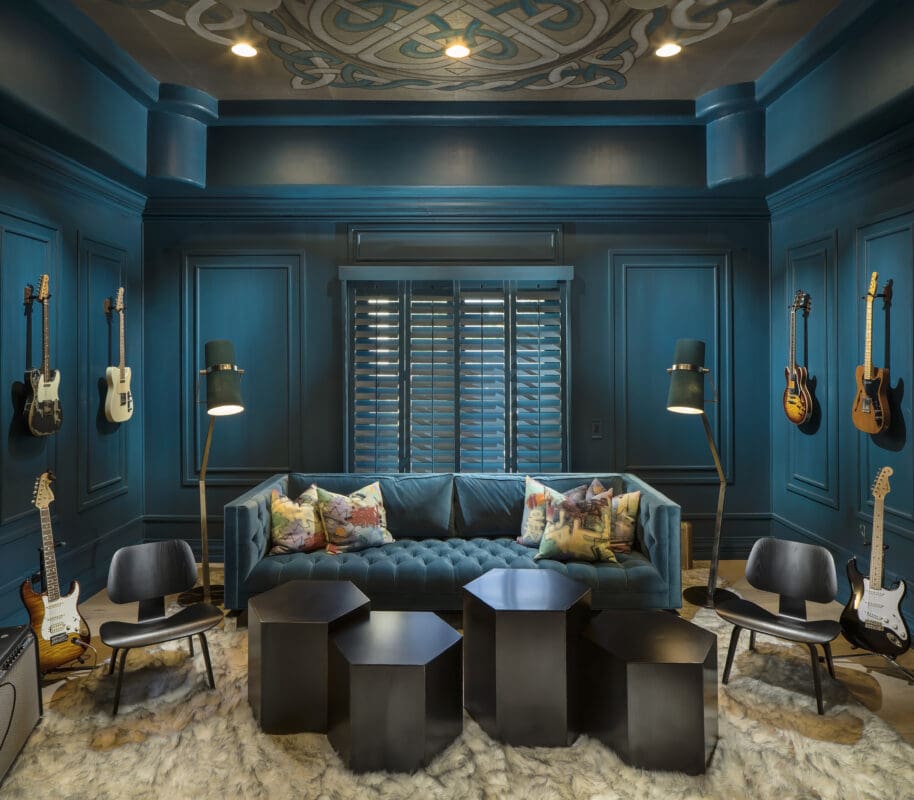
We have seen a resurgence of the color blue, albeit we have been turning to blue for the last several years. Recently, Pantone declared “classic blue” as the color of the year… which excited my current “blue” project client to declare, “Yay, I will be able to get matching towels!” Those are true words! This project has strong architectural detailing and vernacular appropriateness that will age well over the next several decades. And blue is the color that evokes happy vibes for this client so it is a win!
So, how does all of this relate to designers and artists in general setting the trends? Anyone who spends their life pursuing artistic expression is, by nature, constantly searching for something new and different, or a way to reinvent something from the past in a fresh new way that speaks to a modern audience. By involving those base emotions, the “next new thing” used by the artists gains a following. Then, more and more people get on board, and a snowball effect begins to form. Even in digital design, tools like a logo maker reflect this creative cycle, pulling from current aesthetics while giving users a way to personalize and push boundaries.
The Science of Trends
This is an interesting concept in psychology. According to Psychology Today, “one lesson from social psychology is the influence others have on us. Research shows we do not have as much control over our thoughts and behavior as we think. We take cues from our environment, especially other people on how to act.” Humans have evolved to have a group mentality, and typically think that following the pack is the best way to thrive. This is the principle of social proof, the reason why advertisers claim that a product is “best-selling” or “fastest growing.”
Trends exist for a reason and good designers seek to understand but not replicate them. The goal for many creatives and artists is adapting to new trends while also remaining forward-thinking and challenging the status quo. Good design should be honest and have a long-lasting appeal. This means transcending the immediateness of current trends while still employing the important elements that they bring to the design world.
Strong designers continually think outside the box, which is a persistent and difficult challenge. Plus, creative people are blessed with the talent of seeing these emotionally effective concepts before the rest of the world. It’s their goal, and my goal, to share those creations with the world in a way that will uplift all who experience it. When that happens, the snowball begins. From there it is one person sharing a meaningful experience with another person and so on… voila, a trend is born.
Trends allow for a person to express themselves in a safe way acknowledged by our human community. They are to be acknowledged but not to master our design decisions.
FAQs
- Why does the article say designers should “not follow trends” verbatim?
Because blindly following trends risks creating spaces that feel generic or time‑bound rather than customised and lasting. The article stresses that true luxury design starts with the client’s story and setting.
- How do trends actually begin according to the article?
Trends begin when creatives identify a new mode of expression (color, form, texture) that resonates emotionally. Others pick it up, a snowball effect happens, and the trend becomes visible in broader culture.
- What is the “science of trends” referenced in the blog?
It refers to psychological constructs like social proof: people follow cues from others in their environment and thereby adopt certain behaviours or aesthetic choices, which helps trends spread.
- Can a homeowner incorporate a trend like “blue” while still achieving a timeless design?
Yes, if the colour is chosen because it resonates personally (as the blog’s client did) and is applied within a design that’s anchored in architecture, materials and enduring quality. The trend becomes part of a meaningful design rather than the design itself.
- How can a design professional spot or set new trends responsibly?
They should stay attuned to emotional shifts, artistic expressions and cultural cues, then translate those into spaces that still respect context, craftsmanship and client identity. They aim for adaptation, not replication.